

Welcome To Culture Shots
A selection of insights and new ideas from the bright minds at Happy Sandpit and the world of clients, suppliers, thinkers and dreamers that surround us; sharing the brightest, bravest and weirdest overhead lightbulbs at the start of every month.

How to Measure Culture Without Killing It
How to Measure Culture Without Killing It Culture is a fragile thing to measure. The moment people feel watched, graded or dissected, they start performing for the measurement instead of showing the truth. And once the truth disappears, your data becomes a mirror of...

Bias Is a Feature, Not a Bug: Designing Better Decisions
In 2013, a team of expert radiologists at Harvard reviewed lung scans for subtle abnormalities. What they didn’t know was that the researchers had embedded a small, unmistakable image of a gorilla inside one of the scans. Eighty-three percent of the experts didn’t see...

Why Facilitation Matters More Than Content in Culture Work
In culture work, the content matters. But the facilitation matters more. Culture is emotional, relational and behavioural. Without strong facilitation, even the best content becomes flat. A skilled facilitator reads the room, adjusts the pace, manages the emotional...

Why Teams Struggle to Make Decisions in Groups Larger Than Six
Decision-making weakens in large groups not because people are incapable, but because the emotional dynamics become too complex. More voices mean more hesitation. More personalities mean more caution. More perspectives mean slower progress. Large groups often avoid...
End-of-Year Team Building That Isn’t Cheesy
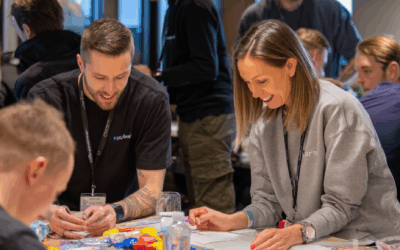
End of year teambuilding has a reputation problem. Too many events become forced fun, awkward activities or quick distractions that do little for culture and even less for connection. People smile, participate politely and return to work unchanged. Real teambuilding...

Culture Is a Documentary, Not a Marketing Video
Most companies present their culture like a marketing video. Polished, curated and carefully scripted. But real culture does not look like that. Real culture looks like a documentary. It is unscripted, honest and sometimes uncomfortable. A marketing video shows...

The Culture You See When Leaders Are Not in the Room
True culture reveals itself when leadership exits the room. When people are no longer managing impressions, their real habits emerge. The tone changes. The energy shifts. The truth becomes visible. Leaders often believe the culture is what they see in meetings. But...

Your Values Aren’t Laminated, They’re Lived
Most organisations treat their values like décor. They are printed, framed and displayed with pride, but they rarely influence how people behave when work becomes difficult. Laminated values look neat, but they do very little. Lived values do the real work. Values...

Why Informal Conversations Are More Honest Than Surveys
Surveys tell you what people are willing to say. Informal conversations tell you what people actually feel. When people believe they are being observed, their answers become cautious. When they are speaking naturally, the truth emerges without effort. Informal...

What High-Performing Cultures Get Right (and How to Copy Them)
High-performing cultures are not built on motivation or charisma. They are built on clarity. Everyone knows why they are here, what they are contributing towards and how their work connects to something meaningful. When clarity exists, people move with purpose instead...

Workshops That Actually Shift Behaviour Instead of Entertaining People
Many workshops entertain people. Very few change people. The difference is intention. Entertainment focuses on activity. Behaviour change focuses on insight, discomfort, repetition and accountability. A workshop succeeds only when people leave thinking differently...

What Your Office Layout Says About Your Culture
You can learn almost everything about a company’s culture by walking through the door. Office layouts reveal whether collaboration is real or forced, whether leaders are accessible or distant and whether communication flows freely or cautiously. A workspace is a...

Why Large Teams Break Culture Faster Than Small Ones
Large teams do not struggle because of talent. They struggle because of scale. As soon as a group becomes too big, coordination becomes harder, communication becomes diluted and cultural clarity becomes fragile. The environment becomes noisier, but less is actually...

The 3-Second Rule: The Smallest Leadership Habit With the Largest Cultural Consequence
The 3-Second Rule is one of the simplest and most powerful leadership habits in modern culture work. It gives leaders a moment to interrupt their automatic reactions, choose a better response and shape the emotional tone of the room with intention rather than...

Why Leadership EQ Is the Hidden Architecture Behind Every Culture
Most organisations focus on strategy, structure and systems when trying to improve culture. But the real architecture that holds a culture together is emotional. The emotional intelligence of leaders shapes how people think, behave and relate to one another long...

When Leaders Step Back, Teams Step Forward
Leadership is not always about taking the front of the room. Sometimes the strongest leadership act is stepping back and allowing the team to take ownership. When leaders step back intentionally, teams step forward confidently. Stepping back is not withdrawal. It is...
How Much Are Your Meetings Costing Your Culture
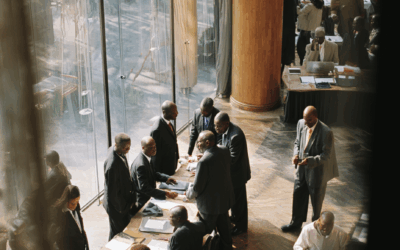
Most organisations underestimate the cultural cost of a meeting. A meeting is not just a time slot. It is a behavioural signal. It tells people what matters, what doesn’t and how decisions are really made. A single poorly run meeting can undermine trust, motivation...

The Real Cost of Silent Disengagement
Disengagement rarely begins loudly. It begins quietly, in the smallest behavioural shifts. Someone stops offering ideas. Someone withdraws in meetings. Someone contributes only what is required. The work gets done, but the energy disappears. It is polite...

Culture Is Built in Moments, Not Posters
Pilots often explain that the real work of flying is not found in the dramatic moments. It happens in the small ones. The subtle corrections made long before turbulence becomes turbulence. These adjustments are quiet, almost invisible, and rarely acknowledged by...

Psychological Safety for Modern Teams
Culture is measurable. The problem is that most organisations measure it in ways that flatten the truth. Surveys reduce human behaviour to percentages. Dashboards turn relationships into data points. Culture becomes something to interpret rather than something to...
LETS MAKE IT HAPPEN
Culture always sounds like a fun concept, but once you get into it, any kind of mass-mindset change or any attempt to engage your people at their most human level, can be messy, tiring and even a little scary. That’s why you should call us. We’re good at this. We get it.
Think culture.
Think engagement.
Think leadership.
Then think of us, and get in touch.

